.png)
.png)
How Long Do Drugs Stay In Your System? Detection Times Explained
Most people think detection windows are one-size-fits-all. They're not. The timeline for how long a substance lingers in your body depends on chemistry, biology, and behavior — and if you're banking on quick elimination, you're setting yourself up for a surprise. Drug screens don't just look for what you took yesterday. They track metabolites, the chemical fingerprints left behind, and those can stick around far longer than the high.
So here's what we know. Whether it's a pre-employment screen or a medical evaluation, the detection window shifts based on what you used, how often, and which test gets run. There's no universal clock. Every substance metabolizes differently. Every body processes it at its own pace. And every test type has a different shelf life for evidence.
The Factors That Control How Long Substances Linger
Detection isn't about guesswork. It's about science — and the variables stack up fast. The substance itself matters, but so does your metabolism, your hydration, your body composition, and how frequently you've used it. Chronic users accumulate more in their system. First-timers clear it faster. Heavy individuals with higher fat percentages may retain fat-soluble compounds longer, while leaner bodies flush them quicker.
Age plays a role too. So does liver function. Your kidneys filter waste, and if they're compromised, elimination slows. Hydration accelerates urine production, but it won't magically erase metabolites. And the type of test administered? That's the final piece. Blood catches recent use. Urine extends the window. Hair reaches back months.
- The chemical makeup of the drug and how your body breaks it down
- How much you took and how often you've been using it
- Your metabolic rate, shaped by genetics, age, and overall health
- Body fat percentage and water intake levels
- Which testing method gets used and what it's designed to catch
Each Test Type Has Its Own Timeline
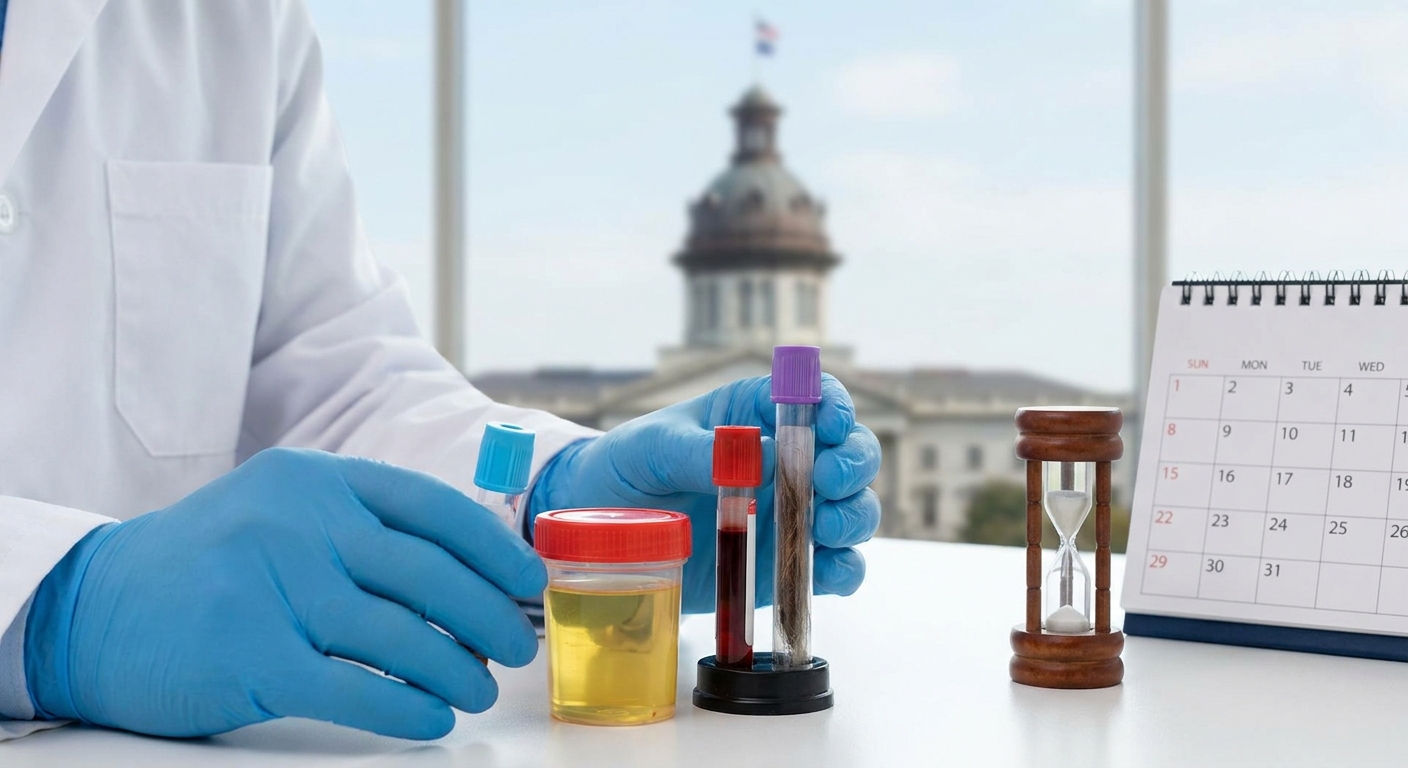
Not all drug screens are created equal. Urine tests dominate because they're cheap, non-invasive, and cover a wide detection range. Blood tests pinpoint active intoxication but miss anything that's already metabolized. Saliva catches what's fresh — usually within a day or two. Hair follicle analysis? That's the long-game tracker, pulling evidence from months back because drugs deposit into the hair shaft as it grows.
The method matters just as much as the substance. A urine screen might flag marijuana use from three weeks ago, while a blood test would come back clean. Saliva won't catch last month's binge. Hair won't tell you what happened last night. Knowing which test you're facing changes the entire risk equation.
- Urine screens detect use from days to weeks depending on the drug
- Blood tests capture recent activity, usually hours to a couple days
- Saliva swabs pick up what's still fresh, often under 48 hours
- Hair follicle exams reach back 90 days or longer
The Usual Suspects and Their Windows
Marijuana sticks around longer than most people expect, especially for regular users. THC binds to fat cells, and that means it doesn't flush out overnight. A one-time user might clear it in three days. A daily user? Try a month or more in urine. Cocaine metabolizes faster — usually gone from urine within a few days, blood within two. Opiates follow a similar short window in blood and urine but linger in hair like everything else.
Alcohol clears quickly because it's water-soluble. You won't find it in hair, and it's out of urine within a day. Amphetamines hang around for a few days in urine, less in blood. Benzodiazepines can stretch detection into weeks if you've been taking them regularly, even though casual use clears faster. Every substance has its own metabolic pathway, and that dictates how long the evidence lasts.
- Marijuana shows up in urine for 3 to 30 days, blood for 1 to 2 days, saliva for 1 to 3 days, and hair for 90 days
- Cocaine clears urine in 2 to 4 days, blood in 12 to 48 hours, saliva in 1 to 2 days, and lingers in hair for 90 days
- Opiates leave urine in 2 to 4 days, blood in 6 to 24 hours, saliva in 1 to 4 days, and hair in 90 days
- Alcohol exits urine in 6 to 24 hours, blood in up to 12 hours, saliva in 6 to 12 hours, and doesn't show in hair
- Amphetamines clear urine in 1 to 3 days, blood in 12 hours, saliva in 1 to 2 days, and appear in hair for 90 days
- Benzodiazepines can last in urine for 3 to 6 weeks with chronic use, blood for 2 to 3 days, saliva for 1 to 10 days, and hair for 90 days

Why the Range Is So Wide
The massive variance in detection times comes down to how the body handles different drugs. Fat-soluble substances like THC get stored in adipose tissue and release slowly over time. Water-soluble compounds like alcohol pass through your kidneys and exit fast. Metabolism varies person to person, and factors like liver enzymes, kidney efficiency, and genetic makeup all shift the timeline.
Frequency matters more than most people realize. A single dose processes and clears predictably. Repeated use builds up in tissues and extends the window. That's why chronic marijuana users can test positive weeks after quitting, while someone who smoked once might be clean in days.
Detox Myths That Don't Hold Up
There's no shortage of products and tricks claiming to flush drugs from your system overnight. Most of them are garbage. Drinking gallons of water might dilute your urine, but labs test for that — and dilution can trigger a retest or automatic fail. Drug testing myths rarely do anything beyond emptying your wallet. Exercising might mobilize fat stores where THC hides, but it won't eliminate it faster than your liver and kidneys already do.
Time is the only real answer. Your body has natural detoxification pathways, and they work on their own schedule. Supporting your health with hydration, nutrition, and rest helps those systems function, but it won't compress a two-week window into two days. If you're facing a test, the math is simple: know the substance, know the timeline, and plan accordingly.
- Excessive water intake can dilute samples but often gets flagged by testing labs
- Commercial detox products rarely deliver on their promises and can waste money
- Exercise may release stored THC but won't speed up overall elimination significantly
- Only time allows your liver and kidneys to process and clear metabolites naturally
What This Means for Your Decisions
Understanding detection windows isn't about beating the system. It's about making informed choices and knowing what you're up against. If you're applying for a job, preparing for physical exams, or dealing with legal obligations, the timeline matters. Business testing services and individual screenings both rely on these detection windows to make accurate assessments. Guessing wrong can cost you an opportunity or worse.
We've walked through the science, the variables, and the timelines. The takeaway is clear: detection windows are predictable when you know the factors at play, but they're not universal. If you're uncertain about your situation or need guidance, consult a healthcare professional. They'll give you answers grounded in your specific circumstances — not myths, not shortcuts, just facts.
Ready for Clarity? Let's Talk
We know how confusing drug detection timelines can be, especially when the stakes are high. If you need straightforward answers or want to schedule a reliable screening, let's make it easy. Give us a call at 803-790-2045 or contact us today so we can help you move forward with confidence.
‹ Back
Recent Posts
-

How Long Do Drugs Stay In Your System? Detection Times Explained
October 1, 2026
-

DOT Medical Card Expiring? Here's What Drivers Need To Know
September 17, 2026
-

What's The Difference Between Legal & Personal DNA Testing?
September 3, 2026
-

Do You Need an Appointment for Drug Testing in Columbia?
August 20, 2026
-